Tire Size Decoder
Enter a full tire size and see the decoded markings, theoretical diameter, section width, sidewall height, circumference, and revolutions per mile.
Open the decoder

Learn how metric and flotation tire sizes work, including width, aspect ratio, construction, rim diameter, and service markings.
Tire size: A standardized marking molded into the sidewall that describes major tire dimensions, construction, load capacity, and speed capability. Tire size markings help compare dimensions, but they do not by themselves confirm whether a tire is appropriate for a specific vehicle.
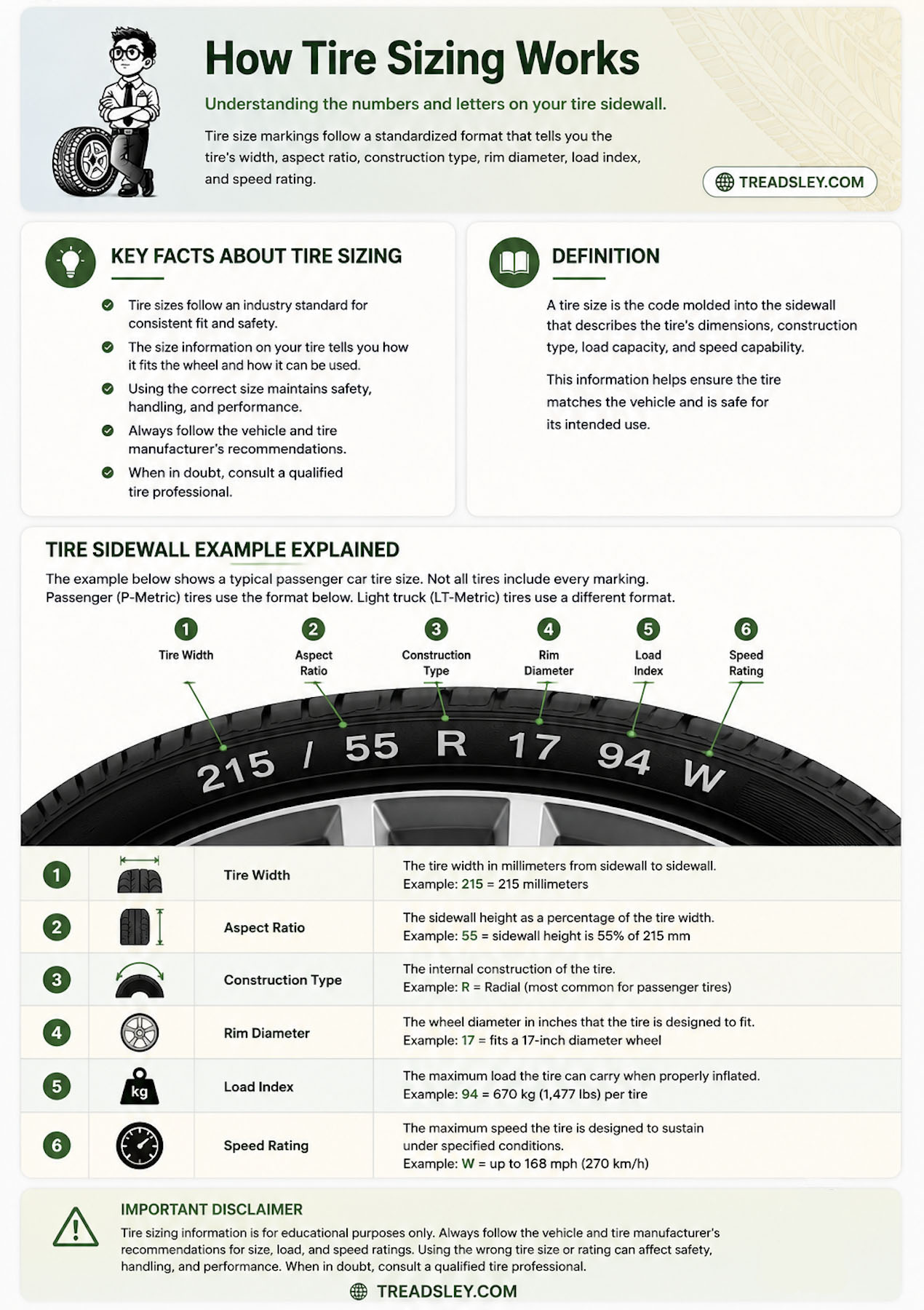
The visual guide below explains a common passenger tire size format. It shows how the tire width, aspect ratio, construction type, rim diameter, load index, and speed rating appear on the sidewall.
Not all tires use the same format. Passenger, light truck, commercial truck, trailer, and specialty tires may use different markings. Always follow the vehicle and tire manufacturer's recommendations for size, load rating, speed rating, inflation pressure, and service use.
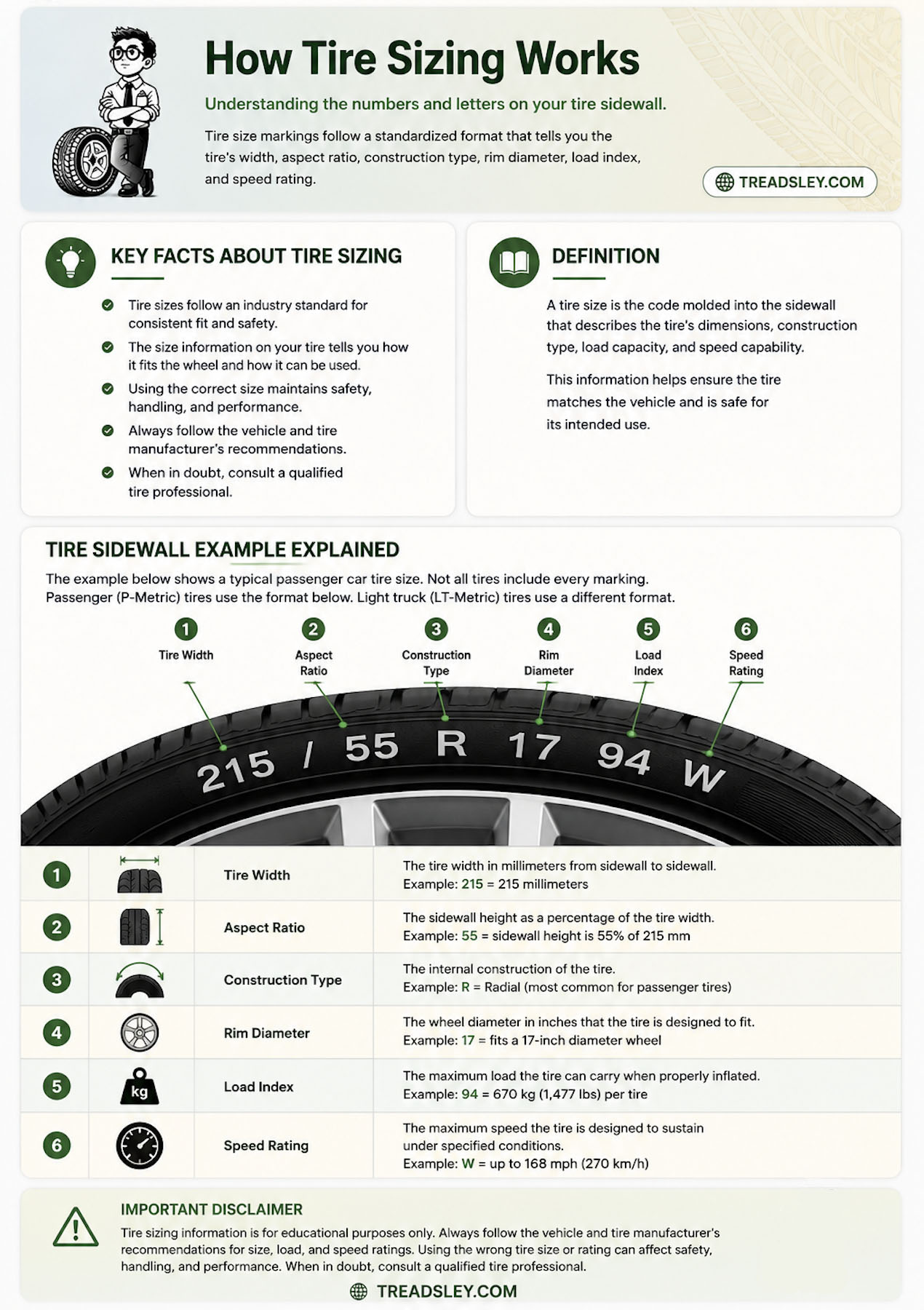
A common metric tire size such as 225/50R17 describes section width, aspect ratio, construction, and rim diameter.
In 225/50R17, 225 is the nominal section width in millimeters, 50 is the aspect ratio, R indicates radial construction, and 17 is the rim diameter in inches.
Many sidewall markings also include a load index and speed rating, such as 94W. These ratings relate to the tire's load capacity and speed capability under specified conditions. They should always be checked against the vehicle manufacturer's requirements.
Flotation sizes such as 31x10.50R15 use a different format, usually indicating approximate overall diameter, section width, construction, and rim diameter.
Enter a full tire size and see the decoded markings, theoretical diameter, section width, sidewall height, circumference, and revolutions per mile.
Open the decoderCompare two tire sizes after you understand what the markings mean.
Compare two sizesLearn why tire diameter changes can affect speedometer and odometer readings.
Learn moreTreadsley consumer tools are provided solely for personal, non-commercial, informational, and educational use. They do not replace vehicle manufacturer guidance, tire manufacturer guidance, applicable legal requirements, or inspection by qualified tire and service professionals.
Use of Treadsley consumer tools is subject to the Terms of Use and Privacy Policy.